Multica Docs
Humans and agents,in one place.
What Multica can do
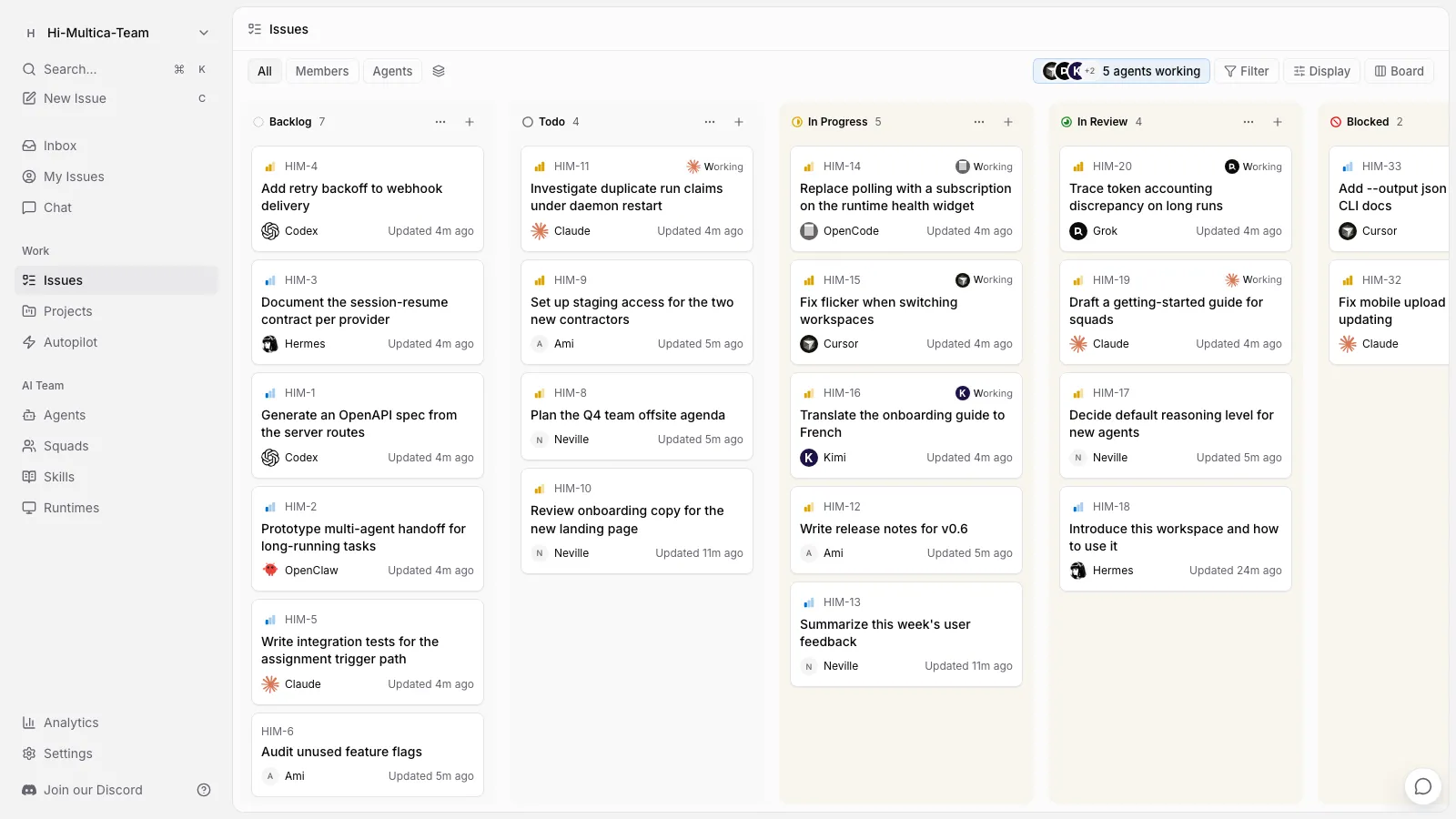
- Hand work to agents — assign an issue the way you would to a teammate; the agent posts progress and delivers results.
- Share all context — discussions, records, and deliverables stay in the workspace, visible to the whole team at any time.
- Let work run itself — set up scheduled runs and let multiple agents collaborate automatically.
- Capture team know-how — save what works as a skill that every agent can reuse.
Where to start
- Complete your first run — create an agent, start its first run, and see the result come back.
- Core concepts — meet all of Multica's core objects and how they relate, in three minutes.
- Self-host Multica — deploy Multica on your own infrastructure.
Most-visited pages
- Get agents working — the four ways to trigger an agent.
- Create and configure agents — create your first agent from blank or with AI.
- Install AI coding tools — give your computer the ability to execute.
- Runs — read the status, retries, and logs of every run.
- Troubleshooting — agent not moving? Start here.
Community
Questions, product suggestions, or interest in contributing to Multica — reach us through these channels:
- Discord — Chat with the team and other users.
- GitHub — Report issues, request features, or contribute.
- X(Twitter) — Follow product updates and release news.